
Pergola Creations
Why Sustainable Architecture in Ghana Should Be for Everyone
Sustainable architecture should not be treated as a luxury extra. In Ghana, where heat, rainfall, rising energy costs, and rapid urban growth shape everyday life, sustainable architecture in Ghana should be a standard part of the way we design and build. It should not be reserved for high-end homes or expensive developments.
A well-designed building should do more than look impressive. It should be comfortable, efficient, practical to maintain, and responsive to its environment. That is the true purpose of sustainable building design. For many people, the word “sustainability” sounds expensive. It often brings to mind solar panels, imported materials, smart home systems, and luxury eco-developments. While these features can contribute to sustainability, they are not where sustainable design begins.
Sustainability starts with fundamental design decisions: how a building is positioned on its site, how air moves through it, how sunlight enters interior spaces, what materials are selected, and how much energy the building requires to remain comfortable.
Good sustainability is not about making buildings more complicated. It is about making them work better.
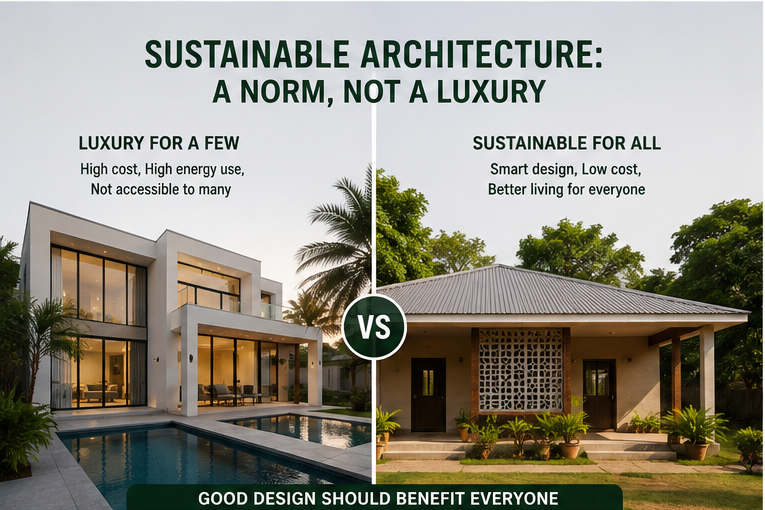
Sustainable Architecture for all. (Source: AI-generated Illustration)
Sustainable Building Design Starts Before Construction
Long before the first block is laid, key decisions have already been made. The orientation of a building, the position of windows, the depth of roof overhangs, the height of ceilings, and the arrangement of outdoor spaces all influence how a building performs throughout its lifespan.
A poorly positioned building may absorb excessive heat throughout the day. A room without adequate airflow may rely heavily on fans or air conditioning. A building with insufficient shading may remain uncomfortable despite expensive finishes. These are not merely design preferences. They directly affect comfort, energy consumption, maintenance costs, and overall quality of life.
This is why sustainable architecture in Ghana must begin at the planning stage. Designing for airflow, shading, and natural daylight from the outset is far more effective than attempting to solve these issues after construction.
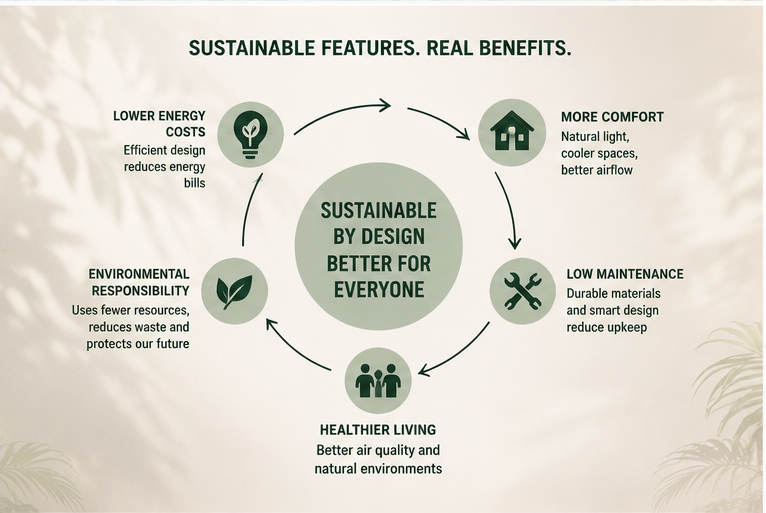
Benefits of Sustainable Architecture (Source: AI-generated Illustration)
Sustainable Architecture Is Not Only for Luxury Homes
One of the most common misconceptions about sustainable building design is that it belongs exclusively to luxury architecture. In reality, many sustainable design strategies are also among the most practical and cost-effective. Natural ventilation, shaded verandas, efficient layouts, durable materials, and thoughtful window placement can benefit buildings of any size or budget.
A modest family home can be sustainable, a small office, schools, clinics, apartment buildings, and community facilities can all be designed to use resources more efficiently while improving comfort for their occupants. When sustainability is treated as a premium feature, many people are excluded from its benefits. When it is treated as a design responsibility, it becomes part of how architecture should naturally be practiced.
Why Climate Responsive Architecture Matters in Ghana
Climate responsive architecture is particularly important in Ghana because buildings must contend with heat, humidity, intense sunlight, seasonal rainfall, and changing weather patterns. Buildings that ignore climate conditions often work against their environment. They require more cooling, consume more energy, and generally demand higher maintenance over time. By contrast, buildings that respond to local climate conditions can remain more comfortable, operate more efficiently, and provide better long-term value.
Climate responsive architecture asks important questions:
- How does the sun move across the site?
- Where do prevailing winds come from?
- How can heat gain be reduced?
- How can rainwater be collected or managed effectively?
- Which materials perform best in local conditions?
- How will occupants use the space throughout the day?
The answers to these questions significantly influence the performance of a building for decades to come.
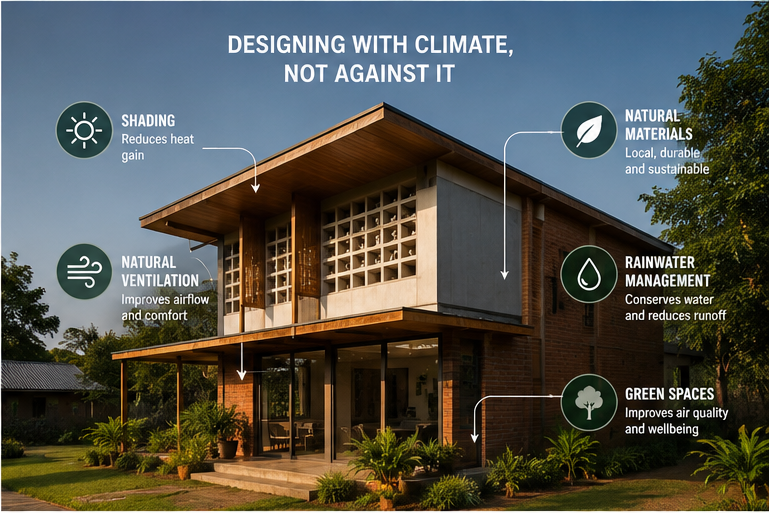
Passive Design Meaures for Sustainable Architecture (Source: AI-generated Illustration)
The Importance of Material Selection
Sustainable architecture is also about choosing materials wisely. This does not necessarily mean selecting the most expensive products. Instead, it means considering durability, availability, maintenance requirements, and suitability for local conditions. A material that appears attractive but deteriorates quickly in Ghana’s climate may not be sustainable at all. The best material choices support the building’s function, respond to the environment, and remain practical for both the client and the long-term use of the building.
Sustainability also involves reducing waste. Well-planned projects generate fewer construction errors, less material waste, and fewer costly modifications during construction. This saves time, money, and resources.
How Sustainable Homes Improve Everyday Living
At its best, sustainability is not something people admire from a distance. It is something that is experience every day. It is experienced when a room remains cooler without excessive dependence on air conditioning. It is experienced when natural daylight brightens a space without causing glare or when maintenance requirements are reduced. It is again experienced when utility costs become more manageable or when homes support healthier and more comfortable lifestyles.
This is why sustainable homes in Ghana should not be viewed as merely a trend or marketing feature, but must represent a smarter and more responsible way of building.
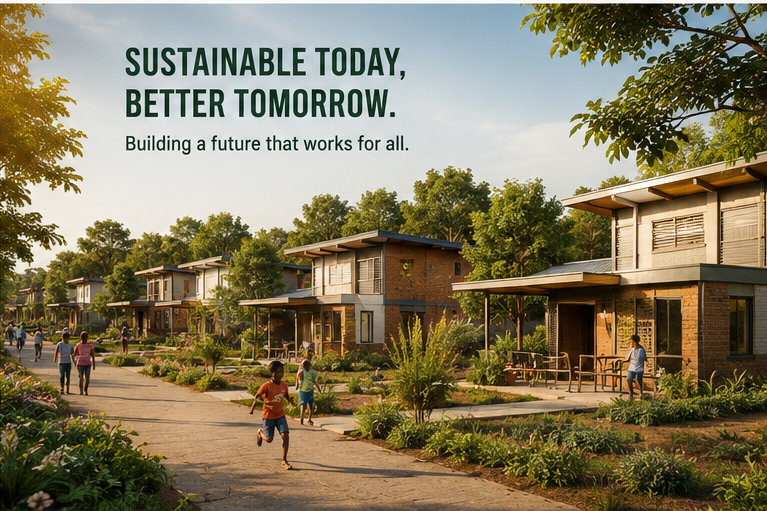
Sustainable Architecture is future considerate (Source: AI-generated Illustration)
Final Thought
Sustainable architecture in Ghana is not luxury for the few, but the foundation of responsible architecture for everyone. The future of architecture in Ghana must move beyond surface aesthetics and focus on comfort, climate responsiveness, durability, efficiency, and long-term value.
A truly sustainable building is not only better for the environment. It is better for the people who live, work, learn, and grow within it every day. If we want buildings that serve present and future generations while paying homage to our history, sustainable design should become the standard, not the exception.