
Pergola Creations
Architecture, Heat, Flooding and the Future of Building in Ghana
The future of architecture in Ghana cannot ignore climate.
For a long time, many building conversations have focused on aesthetics, size, and status. While these factors have their place, the realities of rising temperatures, increasing rainfall, flooding, rapid urbanization, and growing energy demands require us to rethink what good architecture truly means.
A beautiful building that overheats during the day, floods during heavy rains, or relies entirely on air conditioning to remain comfortable cannot be considered successful. Good architecture should do more than look impressive; it should respond intelligently to its environment and improve the experience of the people who use it.
In Ghana, climate is not a secondary consideration. It is one of the most important design factors we have. The way we orient our buildings, select materials, manage water, create shade, and encourage natural ventilation all influence how well a building performs over time. Architects, have a responsibility to design with these realities in mind.
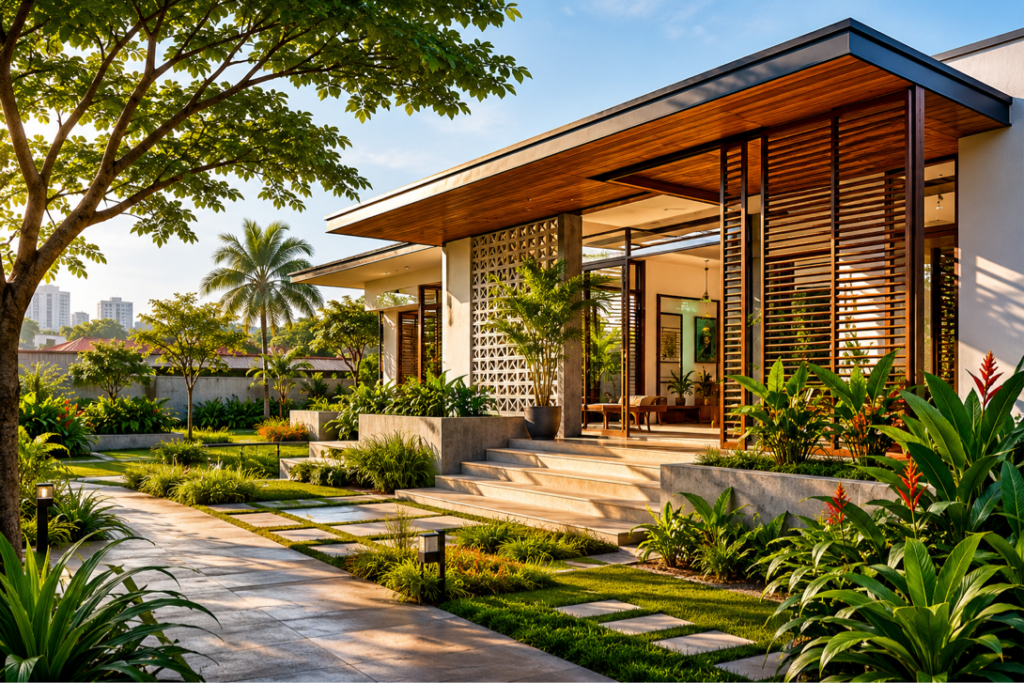
Context: Building for climate resilience.
Source: AI-generated Illustration
Climate Is Not a Background Issue
Climate affects almost every part of a building. Climate affects;
- Where windows should be placed.
- How much shade is needed.
- The materials that should be used.
- How roofs should be designed.
- How water should be drained.
- How comfortable people feel inside.
When climate is ignored, buildings often become expensive to maintain and uncomfortable to use.
In Ghana, where warm temperatures and seasonal rainfall are part of everyday life, climate-responsive designs should be one of the first considerations in all projects.
Designing for Heat
Heat is one of the most common challenges in building design, especially in the tropics. Many modern buildings rely heavily on mechanical cooling, but air conditioning should not be the only answer. A building should first be designed to reduce heat gain naturally. This can be done through proper orientation, shading, ventilation, roof design and material selection.
For example, deep overhangs can help protect openings from direct sun. Properly placed windows can encourage cross ventilation. Higher ceilings can help hot air rise above the occupied space. Courtyards and shaded outdoor areas can also help create more comfortable transitions between indoors and outdoors. These are more than aesthetic choices, they are good design strategies.
Designing for Rainfall and Flooding
Water is another major consideration. Poor drainage, bad site planning and weak construction detailing can create serious problems during heavy rainfall. With Ghana’s annual flooding problem, particularly in the capital city, water management is crucial in the design of any building. Water can collect around the building, enter internal spaces, damage finishes or weaken the long term durability of the structure.
Good architecture thinks carefully about how water moves. This includes site levels, drainage routes, roof water collection, landscape design and the positioning of the building on the land. A well designed building does not pretend rain will not come, it prepares for it and most importantly, manages it.
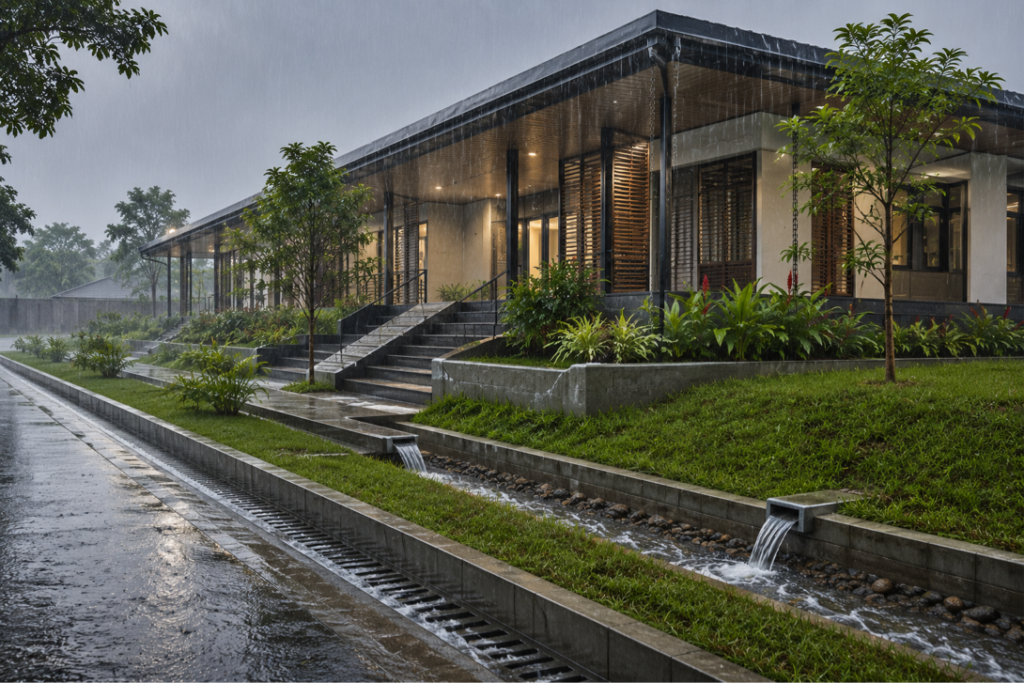
Context: Flood-resilient design.
Source: AI-generated Illustration
Materials Matter
The future of building in Ghana also depends on better material choices. Materials should be selected not only for appearance, but for durability, climate suitability, maintenance and performance.
Some materials may look attractive at first but perform poorly in local conditions. Others may be more practical, more durable and better suited to the climate.
Good design considers how materials will age, how they will respond to heat and moisture, and how easy they will be to maintain over time. A building is not truly complete on handover day. It must continue to perform for years.
Comfort Should Be Designed, Not Forced
Comfort should not depend only on mechanical solutions. Fans and air conditioning can support comfort, but they should not be used to cover up poor design. A building that cannot breathe, cannot shade itself and cannot manage heat will always place more pressure on artificial/ mechanical systems.
Climate responsive architecture helps reduce that pressure.It creates spaces that feel more natural, more efficient and more pleasant to live in. This is especially important in residential design, where people spend long hours sleeping, cooking, resting, working and gathering with family. A home should not fight against the climate.
The Role of Architects in Ghana’s Future
Architects have an important role in shaping the future of building in Ghana. They are not only responsible for creating beautiful spaces. They also help clients make better decisions about land use, layout, materials, climate response, functionality and long term value.
As cities grow and environmental pressures increase, architectural thinking becomes even more important. Good architects help clients move beyond short term appearance and think about how buildings will perform in real life.
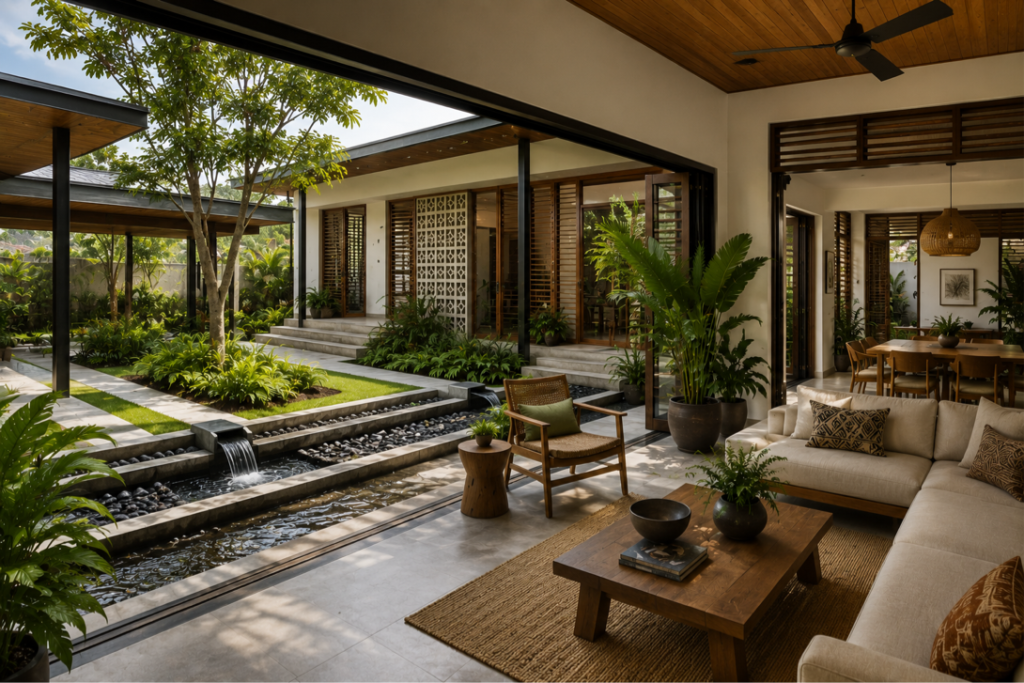
Context: Client responsive architecture.
Source: AI-generated Illustration
Final Thought
Climate-responsive design is not an optional feature of architecture in Ghana; it is a necessity. The challenges of heat, flooding, and environmental change should not be addressed after a project is completed. They should inform design decisions from the very beginning. When architecture responds to climate, it becomes more comfortable, more resilient, and ultimately more valuable.
The future of building in Ghana will not be defined by how large our buildings are, but by how intelligently they respond to their context. The most successful projects will be those that balance beauty, functionality, sustainability, and a strong connection to place.
For me, that is where the future of Ghanaian architecture lies.