
Pergola Creations
The Problem With Copying House Designs
A house design may look beautiful in a photograph, but that does not mean it will work everywhere.
One of the most common mistakes people make when planning a building project is copying a design without understanding the context behind it. The image may be attractive. The layout may seem impressive. The exterior may feel modern. But architecture is never just about appearance.
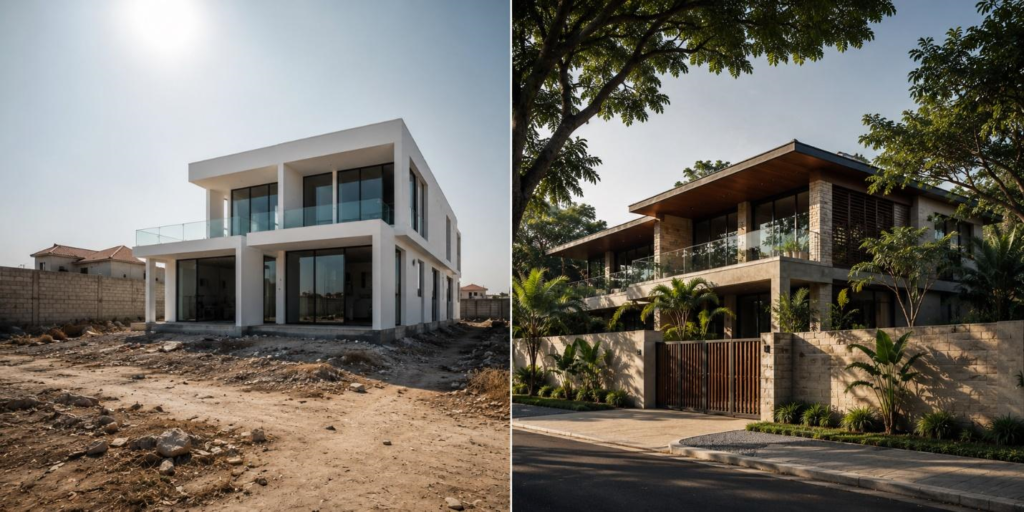
Context-responsive residential design.
Source: AI-generated illustration
Every good building is shaped by context.
Context means the land, climate, budget, culture, lifestyle, materials, regulations and the people who will use the space. When these things are ignored, even a beautiful design can fail.
Place
Good architecture is rooted in place.
A building designed for one location would not suit another. The direction of the sun, the movement of wind, the slope of the land, the surrounding buildings, the landscape, and the lifestyle of the occupants all influence the final design.
When people copy house designs without considering these details, they often end up with spaces that may look good from the outside for them, but inherently do not work from various viewpoints.
- A design that works in Dubai may not work in Accra.
- A design created for a cold climate may not suit a tropical one.
- A design built on a large open plot may not fit a narrow urban site.
- A design made for one family may not serve another family’s routine.
Architecture must be adapted to its environment.
Climate
Climate is one of the most important reasons copied designs fail.
Many online house designs are created for very different weather conditions. They may have large glass walls, high-pitched roofs comparable to Everest, limited sun shading cover, sealed rooms or materials that are not ideal for Ghana’s heat and rainfall.
When these designs are copied without adjustments made for context, the building may become hot, poorly ventilated or difficult to maintain.
A good architect considers how the sun hits the building, where natural breeze can enter, how rainwater will be managed and how materials will perform over time.
These decisions are not always obvious in a photograph, but they are essential to comfort.
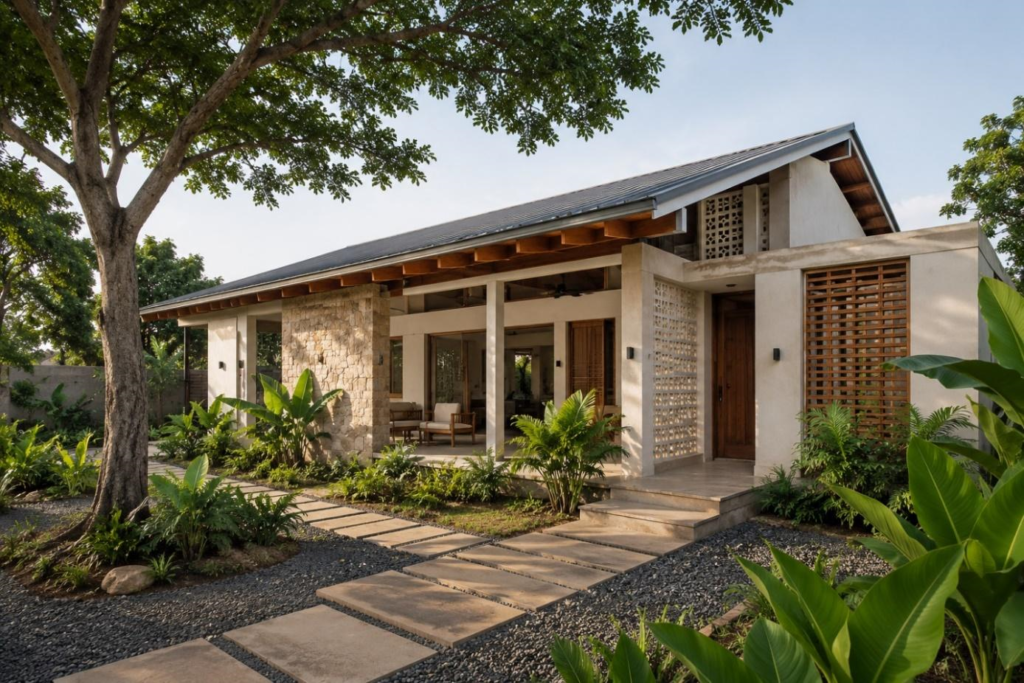
Climate-responsive tropical residence.
Source: AI-generated illustration
It is not the worst thing to copy a design; you would not be the first to suggest it, and neither would you be the last. But if a Pinterest image piques your interest and nudges you to tell your architect to copy exactly the same design, give them the necessary leeway to make design decisions that can help enhance your home. (Side Note: This isn’t a suggestion that should be implemented)
Lifestyle
A home should be designed around the people who live in it. Different households have different needs. Some families entertain often. Some need more privacy. Some require staff areas, outdoor kitchens, prayer spaces, home offices, storage rooms or flexible bedrooms. Others may need layouts that support elderly relatives or young children.
A copied design rarely understands these needs. The need to have proper circulation, sufficient storage, privacy and valuable spaces may not all be achieved properly with a design made to exactly match an existing one. This is why spatial planning matters.
Your home should not force you to adapt awkwardly to a copied layout. The layout should be designed around your real life.
Context
Many images online do not reveal the real cost of the design. A house may look simple, but the construction method, structure, finishes, glazing, lighting and detailing may require a much larger budget than expected. When you copy designs without understanding the cost, you may be forced to cut corners later. This can weaken the quality of the final build.
A professional architect helps balance ambition with practicality. They can identify which parts of the design are essential, which can be adapted and which may not be realistic for the budget. Good design is not about copying the most expensive look. It is about making intelligent decisions.
Hidden Problems
The danger of copying is that the problems may not appear immediately or even be seen from the beginning. At first, the project may seem to be progressing well. The exterior may look close to the reference image. You may begin to feel satisfied, as long as everything seems to go in the right direction.
But over time, issues can begin to show. Rooms may feel too hot, the layout may feel awkward, natural light may be poor, water may collect in the wrong places or come out from the worst places, certain spaces may go unused, maintenance may become expensive, and the building may not feel as comfortable as expected.
These are not small issues. They affect the quality of daily life.
Translating Ideas
A good architect does not ignore your vision as a client. Instead, they study it carefully. An architect asks what your future will look like. They dive into the purpose of the project, what you are looking to get out of it, and how you will use the possible spaces.
All these and more influence the ideas created for your project, which are fit for your site, lifestyle and pocket. This is the difference between copying a design and designing with purpose in mind. Copying imitates without forethought, design takes the past, present and future into consideration for a solution.
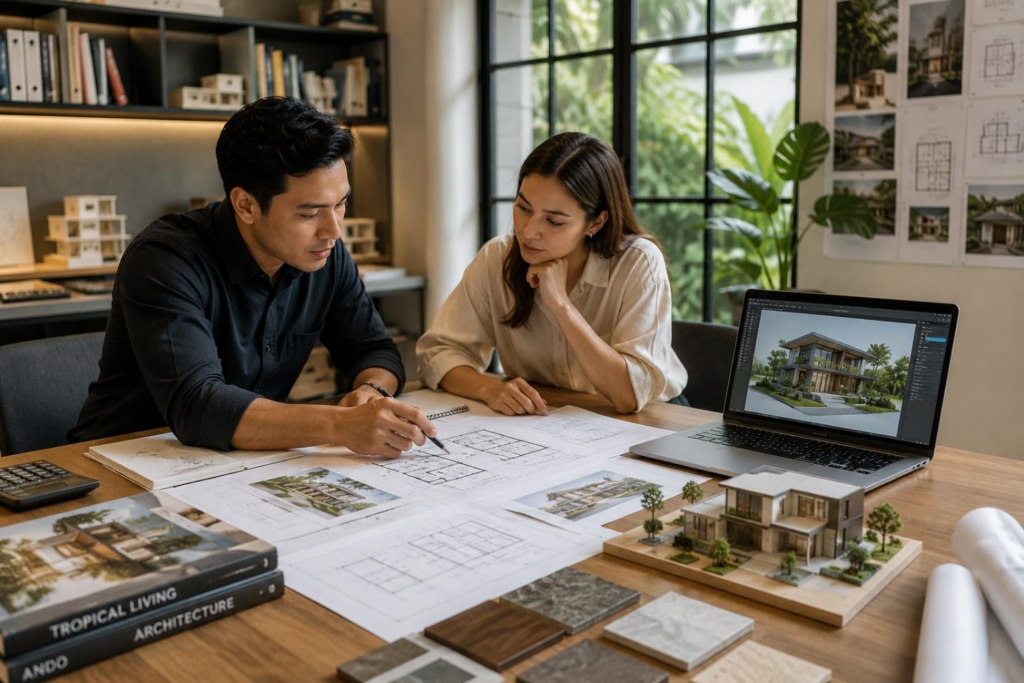
Architectural design collaboration process.
Source: AI-generated illustration
Final Thought
The problem with copying home designs is not that inspiration is bad. Inspiration is useful. The problem is copying without understanding context. A successful building must belong to its place. It must respond to climate, land, people, materials and budget. It must work in daily life, not just look good in a picture. Good architecture does not simply ask, “What image do you like?” It asks, “How should this building work for you, here, now and in the future?”