
Pergola Creations
Why Pinterest Should Inspire Your Home, Not Design It
Pinterest can be a brilliant place to discover what you like.
It helps clients understand their taste, preferred colors, layouts, finishes, and general mood. It can make the early design process feel exciting and visual. It can also help an architect understand the kind of atmosphere a client is drawn to.
But Pinterest should inspire your home, not design it.
A beautiful image online does not understand your land, your climate, your budget, your family routine or the way you actually live.
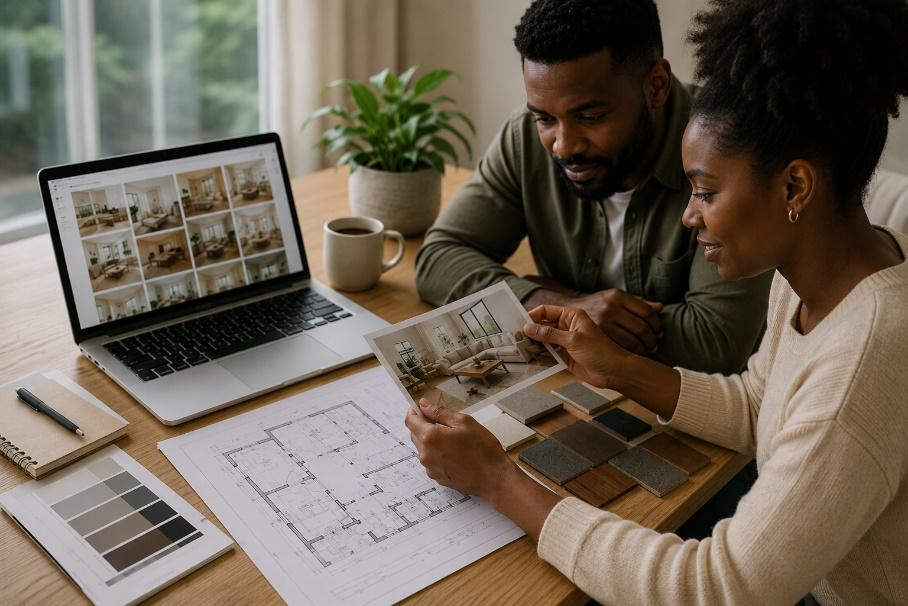
Context:Conceptual design planning.
Source:AI-generated illustration.
That is where architecture begins
Inspiration Is Useful
There is nothing wrong with bringing images to your architect.
In fact, visual references can be helpful. They can show whether you prefer clean modern lines, warm natural finishes, open plan spaces, bold façades, soft interiors, or a more traditional feel.
Images can help start a conversation.
The problem begins when inspiration becomes instruction.
A Pinterest image is usually the result of a very specific site, budget, climate, culture, and client brief. What works beautifully in one location may not work at all in another.
A design cannot simply be lifted from a screen and placed onto your land.
Every Site Is Different
No two plots of land are the same.

Context: Site-responsive architectural planning.
Source:AI-generated illustration.
Your site has its own size, shape, slope, views, access points, sun direction, wind movement, neighbouring buildings, and restrictions. These things affect the design.
A house copied from Pinterest may have been designed for a completely different climate or lifestyle. It may face a different direction. It may sit on a larger plot. It may use materials that are not practical locally. It may depend heavily on lighting, styling, and photography to look good.
Architecture must respond to the site it belongs to.
If it does not, the final building may look similar to the image but fail to work properly in real life.
Climate Matters
One of the biggest dangers of copying designs is ignoring the climate.
A home designed for a cooler climate may not work well in Ghana without major adjustments. Large unshaded glass openings, flat exposed surfaces, limited shading, or poor ventilation can create heat problems.
What looks elegant online may become uncomfortable when built without climate awareness.
Your architect has to think about sunlight, shade, airflow, rain, heat, and maintenance. These factors are not always visible in a Pinterest image, but they are essential to how the building performs.
Good design translates inspiration into something that suits the local environment.
Lifestyle Matters Too
A home should not only look good. It should support the way you live.
How many people will live there?
Do you host guests often?
Do you cook heavily?
Do you need privacy between family areas and visitor areas?
Do you work from home?
Do you have children, elderly relatives, or staff to consider?
How much storage do you need?
How do you move through the house every day?
A Pinterest image cannot answer these questions.
Your architect can.
Good architecture is personal. It must serve the people who use it.
Budget Must Shape the Design
Another issue with Pinterest images is that they rarely show the true cost.
A room may look simple, but the materials, finishes, lighting, furniture, and construction details behind it may be expensive. Clients may fall in love with an image without realizing what it would take to achieve it properly.
This is where disappointment often begins.
An architect helps translate your vision into something realistic. They can guide you on what is possible, what can be adapted, and where your budget should be prioritized.
This does not mean reducing your dream. It means protecting it from becoming unrealistic or poorly executed.
How to Use Pinterest Properly With Your Architect
Pinterest should be used as a conversation tool, not a final design.

Context: Collaborative design consultation.
Source:AI-generated illustration.
Instead of saying, “I want this exact house,” try saying:
“I like the openness of this space.”
“I like the way this room feels calm.”
“I like the use of natural light here.”
“I like this material palette.”
“I like the relationship between indoor and outdoor spaces.”
This gives your architect room to understand the feeling behind the image and create something appropriate for you.
The goal is not to copy. The goal is to interpret.
Final Thought
Pinterest is useful for inspiration, but it should never replace architectural thinking.
A successful home must respond to land, climate, budget, lifestyle, and long-term use. It must be designed for real people in a real place, not just for a beautiful image.
Bring the Pinterest pictures. But allow your architect to turn them into something better: a home that belongs to you.